
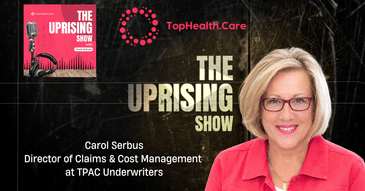
Welcome back to The Uprising Show. In this episode, we dive into the complex world of sponsor-carrier relationships with Carol Serbus, Director of Claims and Cost Management at TPAC Underwriters in Minnesota. With over 40 years of experience in the industry, Carol brings a wealth of insight into where plan sponsors are struggling, the challenges of consistent communication, and why the relationship with brokers and vendors often feels more confrontational than collaborative. She shares her thoughts on what separates proactive sponsors from the rest, the critical conversations that need to happen, and offers practical advice for controlling healthcare costs in today’s ever-changing landscape. Whether you’re a plan sponsor, broker, or just want to be a wiser healthcare consumer, this is a conversation you won’t want to miss.
Timestamps:
00:00 Career journey in insurance industry
04:03 Working with TPAs and brokers
07:51 Cost containment trends as signals
Insights into the Sponsor-Carrier Relationship: Key Takeaways from Carol Serbus
Navigating the complex world of health insurance can be challenging for employers and plan sponsors. In a recent podcast episode featuring Carol Serbus, Director of Claims and Cost Management at TPAC Underwriters in Minnesota, valuable insights were shared about optimizing the sponsor-carrier relationship, understanding the roles of brokers, and the crucial steps sponsors should take to manage healthcare costs and risks. This blog will highlight actionable advice from Carol Serbus to help employers make more informed decisions and foster stronger partnerships.
The Current State of Sponsor-Carrier Relationships
When asked to describe the sponsor-carrier relationship in one word, Carol Serbus chose "confrontational". This sentiment is often rooted in a lack of consistent communication. Sponsors often do not have clear visibility into what is happening with their plans, which can lead to misunderstandings and frustration. According to Carol Serbus, effective partnerships are built on collaboration and mutual understanding, not merely transactional exchanges.
What Successful Sponsors Do Differently
A standout theme from the episode is that successful sponsors are not afraid to tackle difficult tasks head-on. Carol Serbus emphasized that those who figure it out are willing to have challenging conversations and insist on transparency and shared responsibility from their partners. They are proactive in tracking their medical spend, questioning unexpected high-cost claims, and verifying that brokers and third-party administrators (TPAs) are delivering on their promises.
Benefits of Knowing Your Plan and Broker
Carol Serbus shared her advice to plan sponsors, stressing the importance of knowing the details of your health plan and trusting your broker. Sponsors must ensure brokers are actively working to control costs and mitigate risks. If a sponsor does not feel their broker is fulfilling this role, Carol Serbus recommends finding the right partner. Trust and accountability are non-negotiable for successful sponsorship.
The Power of Communication and Education
One critical mistake many sponsors make is losing control of their plan due to a lack of communication with their partners. Carol Serbus pointed out that without regular updates and collaborative discussions with brokers or vendors, sponsors may not be aware of where their money is going or whether it is being spent wisely. She encourages both sides to engage in open dialogue, frequently asking informed questions and demanding clarity.
Continuous education is also vital. The healthcare field changes rapidly, with new drugs, hospital trends, and regulations emerging consistently. Carol Serbus also stressed the need for sponsors to understand what they have purchased and how it impacts employees.
Hard Conversations: The Key to Better Outcomes
Many sponsors shy away from difficult conversations with brokers and TPAs. Carol Serbus advised that asking about reporting, high-cost claims, and risk mitigation strategies is essential. These conversations help identify pain points, establish accountability, and create opportunities for stronger collaboration, ultimately leading to better outcomes for employer groups and their employees.
Most Overlooked Move Sponsors Should Make
One of the most significant oversights Carol Serbus mentioned is the fear sponsors have in asking tough questions. Sponsors must be bold in seeking out partners who are willing to work together transparently and honestly. If the current partnership is lacking, finding the right one should be a priority.
Conclusion: Be a Wise Consumer and Collaborate
The health insurance landscape is more dynamic and challenging than ever. Carol Serbus encourages plan sponsors to become wise consumers, engage in open dialogue, and never hesitate to make hard decisions for the good of their organization and employees. Regular communication, ongoing education, and finding trustworthy partners are vital steps toward controlling healthcare costs and ensuring long-term success.
By following these actionable insights, sponsors can move from chaos to control and transform confrontational relationships into collaborative, mutually beneficial partnerships.
The Uprising Show Website: https://theuprisingshow.com/
Vivek Nanda's LinkedIn: https://www.linkedin.com/in/viveknanda1/
Vivek Nanda's Twitter: https://x.com/vickks
TopHealth Media Website: https://tophealth.care/
“Disclaimer: Informational only. Not medical advice. Consult your doctor for guidance.”
[00:00:00] [SPEAKER_01] One word for the sponsor-carrier relationship today.
[00:00:03] [SPEAKER_00] That word might be confrontational. They're not having consistent communication, so they don't know what's happening with their plan.
[00:00:12] [SPEAKER_01] What separates the sponsor who has kind of figured out from the ones who haven't?
[00:00:17] [SPEAKER_00] The sponsors who have figured it out aren't afraid to do the hard stuff. My name is Carol Serbis. I am the Director of Claims and Cost Management at TPAC Underwriters in Minnesota.
[00:00:32] [SPEAKER_01] So, Carol, how you ended up on this side of the business, you know, and what keeps you interesting?
[00:00:41] [SPEAKER_00] Sure. So, it's a long story, but I'll make it short because I've been in this industry 40 plus years, right? So, originally I was a dental assistant many, many years ago. Went to work for an insurance company paying dental claims and moved to medical claims. And then I just kept learning and growing and worked at a TPA for many years and then went to the stop-loss side.
[00:01:10] [SPEAKER_00] And I've been doing that probably 15 years. I've been with TPAC just over five years now.
[00:01:18] [SPEAKER_01] Wow. And what's like one thing you would say like people don't get it about this side of the world where you are?
[00:01:27] [SPEAKER_00] I think the one thing that people don't understand, at least from my perspective from where I am right now at TPAC, is we are here to be a partner and collaborate. We aren't here to tell you really what you can and cannot do. We're here to help with concerns, issues, the big claims, things that are pain points for our clients.
[00:01:54] [SPEAKER_01] So, in your position, of course, you see what plan sponsors don't, right? So, if you could hand every sponsor one thing you know, like, you know, to level the field, what is it?
[00:02:10] [SPEAKER_00] I think the one thing I would tell plan sponsors or employer groups is know your plan, know your broker, make sure you trust your broker, and make sure they are doing for you what needs to be done to control the costs in your medical spend.
[00:02:32] [SPEAKER_01] And where do you think the sponsors quietly lose control without realizing this?
[00:02:40] [SPEAKER_00] I think the plan sponsors lose control because there's not communication with their partners, meaning potentially their broker or any vendors that they may utilize. They're not having consistent communication, so they don't know what's happening with their plan, the dollars that are going out the door.
[00:03:04] [SPEAKER_01] But don't you think that they don't, in a lot of cases, know even what to look for? I feel like communication needs to be from other ends.
[00:03:15] [SPEAKER_00] It should be both ways to me, right? They hire a broker because they're hiring somebody who has the knowledge, or they're assuming they have that knowledge, right? I think in this day of AI, I was talking to the gal sitting next to me who is an employer group, and she said they got a broker. They just went self-funded. And I said, did you have a list of questions to ask your broker? And she said no.
[00:03:43] [SPEAKER_00] And I said, in this world of AI, ask it the questions to help you gain the knowledge and learn to make sure they're doing what they're supposed to be doing for you.
[00:03:54] [SPEAKER_01] So, yeah, that's fantastic. Are you actively recommending something like this to your clients as well that you work with?
[00:04:04] [SPEAKER_00] You know, a lot of clients we work with, we don't work direct with the employer group. We work typically with the TPA and or the broker. But trust me, we're making those recommendations and those comments because it's all about knowing what's going on, knowing what's out there because the field changes every day, right? There's always a new flavor of the month in the medical field, a new drug that's out,
[00:04:34] [SPEAKER_00] a hospital that all of a sudden you find out isn't doing what it's supposed to do. So it's a lot of education, which I think is really important because people need to understand what it is that they bought and how it's going to impact their employees on a day-to-day basis.
[00:04:57] [SPEAKER_01] What's the conversation sponsors should be having that they are not having currently, in your opinion?
[00:05:05] [SPEAKER_00] I think probably the conversations they're not having are the hard conversations, meaning asking your broker if you're getting reporting from them, what's going on? How come I have all these high-cost claims? What's causing this rise in our dollars that are going out the door that we're spending on our employees?
[00:05:30] [SPEAKER_00] Meaning, what are they doing to help the group mitigate the risk, right, on all their things? Are they reaching out to the TPA? Is the employer group having conversations with the TPA? Are they doing it together, right? Again, I can't say it enough. It's all about collaboration.
[00:05:58] [SPEAKER_01] What separates the sponsor who has kind of figured out from the ones who haven't?
[00:06:06] [SPEAKER_00] I believe what separates them is the sponsors who have figured it out aren't afraid to do the hard stuff, right? They want to challenge and they want to make sure, again, that the spend that's going out the door is correct. And sometimes, let's say you have an employer group that's just switching to self-funding. It's, there's going to be some disruption.
[00:06:35] [SPEAKER_00] So, again, it's the collaboration, making sure the disruption is minimal and that they know as well as their employees know what's going on and how at the end of the day it's going to be a benefit for everybody.
[00:06:50] [SPEAKER_01] Now we're going to do some rapid fire questions. Okay. Here we go. Or the first thing that comes to your mind, go with it, okay? Where are most planned sponsors today? Chaos or control?
[00:07:03] [SPEAKER_00] Chaos.
[00:07:05] [SPEAKER_01] One word for the sponsor-carrier relationship today.
[00:07:11] [SPEAKER_00] I think that word might be confrontational.
[00:07:16] [SPEAKER_01] Most overlooked move a sponsor should make.
[00:07:25] [SPEAKER_00] Boy, that's a tough one. I would say the most overlooked move that a sponsor should make is not being afraid to ask the hard questions. And if they don't have somebody that's partnering with them, then go find the right partner.
[00:07:44] [SPEAKER_01] The latest cost containment trend, is it signal or noise?
[00:07:51] [SPEAKER_00] So, what I'm going to say to that question is, if it's a cost containment function that is going to benefit the employer group, right? Because a lot of them can be trendy. However, if it's an issue that's going to continue for a long period of time, then I would say it's going to start out as noise,
[00:08:16] [SPEAKER_00] but it could become the signal at some point, depending on if it works and how it's implemented. So, I think a lot of it will start out as not sure where we're going with this, but this is what we're seeing is really impacting the market right now. And if you find something that's going to work, it's really not noise anymore. Now it's become a signal to point people in the right direction to help them.
[00:08:46] [SPEAKER_01] Okay. Any last thing you want to add from your end?
[00:08:50] [SPEAKER_00] I would say in this day and age, with the cost of health care and the significant increase in impact it has on every single one of us, be a wise consumer.